Order from chaos. The world is filled with chaos. It has been from the very beginning. We read in the very beginning of the Torah, v’ha’aretz haita tohu vavohu v’chosech al pnei tehom – the land was filled with chaos and there was darkness on the face of the deep. What did God do? God created light. Light to order the darkness and the chaos. Vayomer Elohim yehi or vayehi or, vayar elohim et ha’or ki tov. And God said, “let there be light” and there was light, and God saw that the light was good. This was no ordinary light. This light was holy and beautiful and pure. It was actually a tikkun, a healing. The Netivot Shalom, a modern day Chasidic Biblical commentator, explains that we learn from this that the answer to chaos IS light.
And so he understands that each of these words for darkness in the beginning of the Torah is a reference to the different forces that have come over us or tried to overtake us:
Tohu – the Babylonian Empire
Va’Vohu – the Persian Empire
v’Choshech – the Greek Empire which darkened the eyes of Israel with their decrees.
Al P’nai Tehom – the Evil Roman Empire (Rome) whose depth of evil cannot be fathomed just like Tehom – the abyss
Since the very beginning light has always been holy, and darkness has always been scary. We learn in the Talmud that when Adam the first human saw the sun setting on the day that he was created, he said,
אוֹי לִי שֶׁבִּשְׁבִיל שֶׁסָּרַחְתִּי עוֹלָם חָשׁוּךְ בַּעֲדִי וְיַחְזֹר עוֹלָם לְתֹהוּ וָבֹהוּ וְזוֹ הִיא מִיתָה שֶׁנִּקְנְסָה עָלַי מִן הַשָּׁמַיִם!
“Oy! Woe is me! It’s because I have sinned that the world is becoming dark around me. The world will go back to chaos. This is the death I have been sentenced to in heaven.” He sat and fasted and cried all night long and when the sun rose in the morning, he understood. There is light and there is darkness, and one follows the other. He said, “This is the way of the world.”
Moments of darkness are frightening. It is easy to give in to fear and to despair. But if we look to the Maccabees, we learn how we are supposed to respond together. There were three main mitzvot that the Greeks forbade the Jews from practicing: celebrating rosh chodesh, circumcising their baby boys, and observing Shabbat.
These three mitzvot are central to the Jewish faith, and the Netivot Shalom explains why. Rosh Chodesh is the first day of the new month. Jews live our lives by the lunar calendar. Many of our holidays begin on the 15th day of the month – Sukkot, Purim, Passover, because those nights were the brightest of the month – a full moon. The moon is the light in the darkness. It is our sign, every single day, that even in the darkest times, God is still with us. That even when darkness feels all consuming, there is hope and a guiding path forward. To proscribe Rosh Chodesh would be to extinguish our ability to live a Jewish life, no longer counting our days and celebrating any of our holidays.
Circumcision is one of the first mitzvot commanded to the Jewish people. It is a living testament to our faith and connection to Jewish people who have lived and persevered in every generation. It is an opening up, a focusing, and a physical throughline across generations. To ban circumcision in those days, when Greek gymnasiums and bathhouses proliferated, would be the utmost assimilation, no longer setting us apart, unique among the people around us. And to outlaw this first lifecycle ritual would also negate all those lifecycles that follow it.
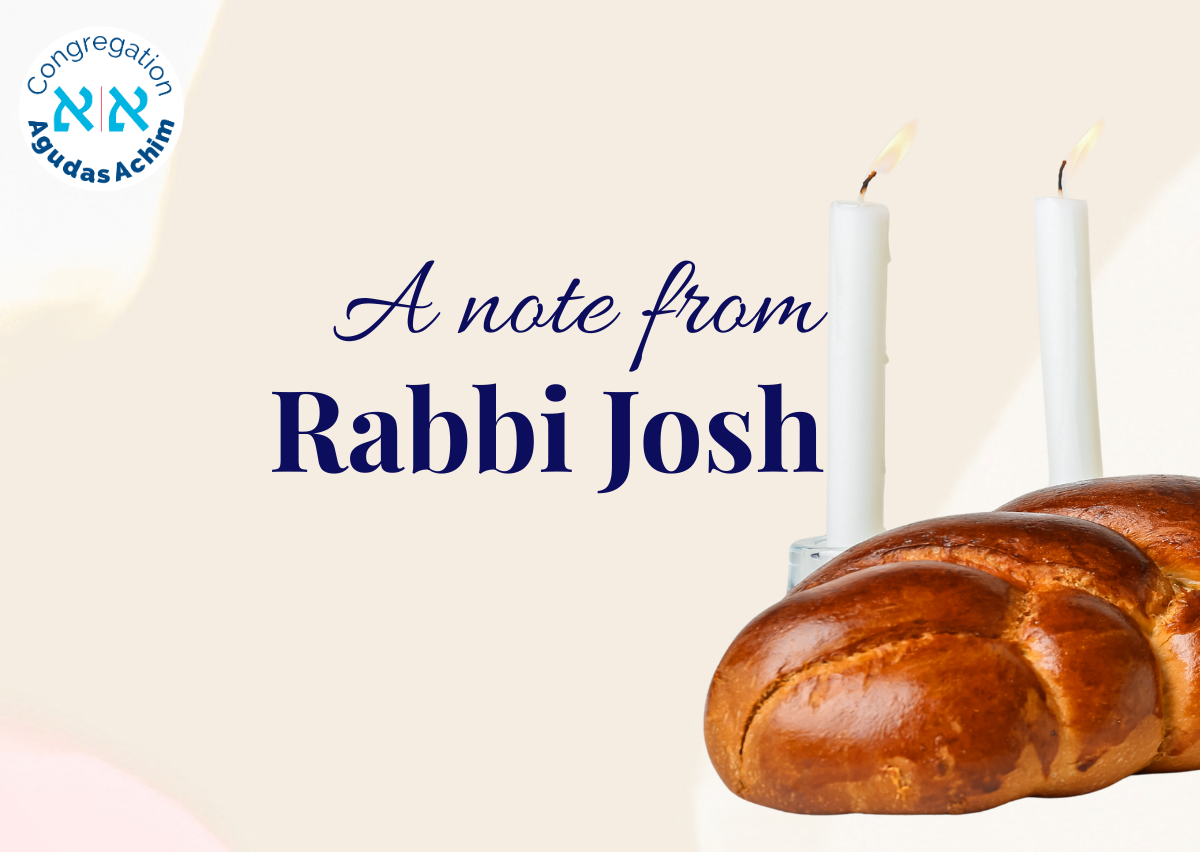
And Shabbat – Shabbat is the heart of it all. Shabbat is the source of light. We recite in Kiddush on Friday night, vayevarech Elohim et yom hashevi’i, “And God blessed the seventh day.” How did God bless it? God blessed it with light. The secret essence of Shabbat is light. In Gematria, Hebrew numerology, the word “Raz” (secret) is the same as the word “light” (207). Light is the secret of Shabbat. The light of Shabbat enlightens everything else. To prohibit Shabbat would force us to forgo our very essence. The Hebrew author Achad ha-Am said that “More than the Jewish people kept the Sabbath, the Sabbath kept the Jewish people.”
What do we do with all of this? Last week on Shabbat I spoke about pirsumei nisa. I spoke about Hersh Goldberg Polin and his fellow hostages lighting Chanukah candles in a tunnel, and how we must take up the meaning of Chanukah in its truest form, and stand up with Jewish pride wherever we are. And the very next day, Jews were murdered while doing exactly that – celebrating Chanukah and publicizing the miracle in Sydney, Australia. We mourn for the victims and their families, and for the multiple other killings this week, at Brown and MIT, the Reiners, and more that didn’t make the headlines as well.
How do we respond when our world falls apart? I asked this question one week ago before any of this happened. And even as I ask it again, I reiterate the same message. We don’t stop. We keep sharing light. We do not give in to fear and hate.
The past two days I’ve been listening to a lot of music on drives in my car, which I haven’t done in a long time. These past few months it’s mostly been podcasts, Israel and world Jewry and Dan Senor and American politics. But I just couldn’t anymore, so I put on a playlist from one of my favorite bands, Lake Street Dive. A song came on that I hadn’t heard in a long time, called “I Can Change.” In the first verse the lead singer sings,
Hate casts a long shadow
I know that I lie in it
And let it rule my mind from time to time
Escapin’ an old battle
Clings on like a vine to me
Whispers dirty lies in my ear
I know we didn’t start this fight
And I won’t let it rule my heart tonight…
There is too much hate in the world, too much darkness. But we know the antidote for darkness. During this holiday of light, we see the power of being a lamplighter. When the shamash lights another candle, its glow is not diminished in any way, but grows exponentially. So too with hope, with joy, with love.
This is a lot to take in. This week, this month, these last two years and more. But our parsha gives us a warning and an instruction. In a moment Ezra will begin reading this week’s parsha and he’ll recite,
וַיְהִי מִקֵּץ שְׁנָתַיִם יָמִים…”
“And so it was after two years of days…”
The rabbis ask why does it say years of days? If it is days, why say years, and if it is years, why say days? “Vayehi (and so it was)” is the language of warning. It teaches us: Be careful, lest you come to an inflection point and have not accumulated years, just days, which is to say, that all of your years are considered like days, without meaning and action.
Rosh Chodesh. Lifecycle Rituals. Shabbat. We stand here today doing all three of things that the Greeks tried to stop us from doing. This is what the Maccabees really stood for – the desire to practice a living and proud Judaism on their own terms. Now it’s our turn. We stand here on Shabbat, the day of light, to inspire ourselves to be a light out in the world. We are here on Rosh Chodesh, to begin again, with all of the hope and promise and faith that a new month brings. And we are here celebrating an incredible bar mitzvah, who stands up here today to lead this community and take his place as the newest Jewish adult, understanding what it means to embody this tradition and heritage. We are here and we are filled with pride.
May this month bring goodness, may this holiday of light bring warmth and joy, and may this Shabbat bring peace.
Chodesh Tov, Chag Urim Sameach, and Shabbat Shalom.